
Introduction
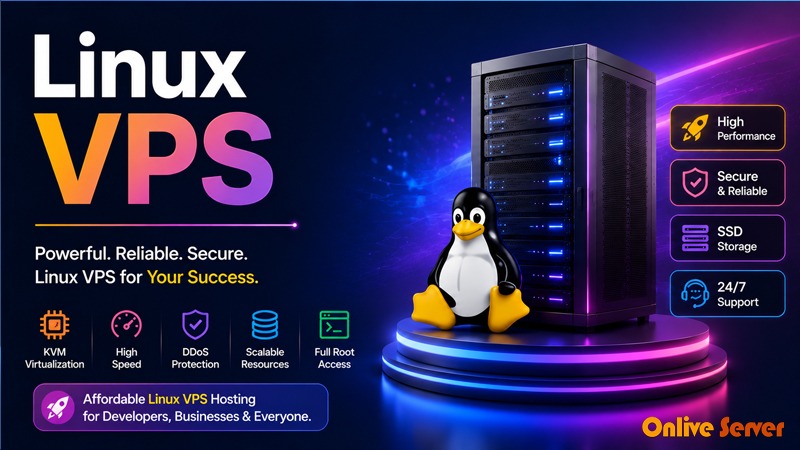
It is undeniable that cheap Linux is irresistible. Scalability is a huge leap for aspiring developers and startups who are seeking low-cost scalability. However, it’s not just about the price tag. The latter is equally essential in terms of performance, reliability & security. OnliveServer’s marketing message is that it is not only a great value, but provides a good infrastructure to support it.
The interesting thing is that some people forget that there are details to Linux VPS that they aren’t familiar with when choosing the lowest-priced offers. Without this oversight, there can be trip ups. To reduce the risks, one can opt for a reliable and good foundation Linux VPS service, similar to OnliveServer. Not everything is about the lowest price; it’s important to be aware of what you require and how the provider will provide. We’re committed to innovation and deliver a compelling offer in a market full of possibilities.
Understanding Affordable Linux VPS Hosting
Choosing a Cheap Linux VPS hosting option that meets your needs can be perplexing. Servers come with different specifications and varying degrees of customer support. Understanding these components is key.
VPS Hosting Basics
Virtual Private Servers (VPS) give you dedicated server resources without the cost of a full server. The underlying technology uses virtualization to partition resources effectively.
- Dedicated Resources: Unlike shared hosting, VPS ensures your allocated CPU and RAM.
- Customization: You can configure the server as per your requirements, including OS and software.
- Scalability: Easily upgrade resources when your website grows.
Evaluating Vendors
Finding a service that aligns with both budget and technical requirements is crucial.
- Reputation: Look for reviews and recommendations.
- Support: Ensure 24/7 support is available.
- Trial Period: Opt for vendors offering a money-back guarantee.
Understanding these basics can help you decide on a system that serves your needs effectively, without unnecessary costs.
Key Features of Cost-Effective Linux Servers
When searching for a budget-friendly Linux VPS, focus on features that maximize value. But how do you distinguish between a good deal and a marketing trap?
Critical Specifications
Cheap doesn’t mean ineffective. Prioritize these specs for better performance.
- CPU Power: More cores mean better multitasking.
- RAM Capacity: Aim for at least 2GB.
- Storage Type: SSDs offer faster read/write speeds than HDDs.
Additional Considerations
Keep an eye on these factors that often go unnoticed.
- Uptime Guarantee: Anything below 99.9% is risky.
- Security Features: Look for SSL certificates and DDoS protection.
- Technical Support: 24/7 support is non-negotiable.
By focusing on these core features, you ensure your VPS is not just cheap but also reliable and efficient.
How to Set Up Your Ideal Linux VPS?
Setting up a Linux VPS might seem daunting, but the right approach can simplify the process. Here’s how.
Step 1: Initial Setup
Before diving into configurations, initial preparations are crucial.
- Select OS: Choose between popular distros like Ubuntu or CentOS.
- Secure Your Server: Change default SSH ports to enhance security.
- Update Packages: Ensure all software is the latest version for security patches.
Step 2: Configuring Software
Tailor the server environment to fit your project’s needs.
- Install Web Server: Nginx or Apache based on use case.
- Database Setup: MySQL or PostgreSQL for data storage.
- Manage Firewalls: Use iptables or firewall-cmd for restricting access.
Setting up correctly from the start can avoid many headaches down the line, ensuring that your server performs optimally.
How to Migrate Linux Server to AWS Cloud?
Large-scale migrations to AWS Cloud on Linux servers can seem like a daunting project. That doesn’t have to be! But before you lift a finger, you have to carefully assess your existing infrastructure, understand the nuances of AWS architecture, and ensure that your current applications will work with AWS. However, preparation is key; you have to carefully study your existing infrastructure, understand the intricacies of AWS architecture and make sure you will be able to move all your existing applications with AWS. Wait, believe me on this, if you don’t pay attention to this initial evaluation then you’ll experience nightmares later. It’s an important opening shot.

Step 1: Pre-Migration Assessment
You’d think you could just jump in. It doesn’t work. Begin by methodically listing every single application, database, and service. Seriously, every one. Understand exactly what needs to make the journey.
Step 2: Data Transfer
AWS provides multiple avenues for moving your valuable data. For transferring anything over 50TB, AWS Direct Connect is often the most practical choice, offering a dedicated network connection to reduce transfer times and improve security. Pick your method wisely.
Step 3: Application Deployment
Once your data is ready, it’s time to set up your applications using services like AWS Elastic Beanstalk or standalone EC2 instances. This won’t help if your application isn’t cloud-native or requires specific legacy hardware not available on AWS.
- Deploy quickly: Use AWS Elastic Beanstalk for rapid, managed application roll-outs.
- Gain granular control: Opt for an EC2 instance to manage every aspect of your server.
And here is some wisdom that is not widely shared: Don’t deploy anything to production without having done a lot of testing in a staging environment. The live systems can react completely differently to real world load. It’s not just about moving files it’s about optimizing your entire digital environment in a new environment. Expect unexpected issues.
How to Secure Your Linux Server from Ransomware?
Protecting your server feels thankless, yet it’s absolutely non-negotiable. One serious breach could erase years of dedicated work and investment. We need to tackle this head-on.
Network Security
Think of firewalls as your digital bouncers; they’re the first line of defense against unwanted intruders. I assumed a default firewall setup was enough. Wrong. Configure highly specific rules using either tables or firewall.
- Control network traffic: Set up iptables for granular, stateful packet filtering.
- Manage dynamic zones: Use firewalld to define flexible network access policies.
Data Encryption
Encryption isn’t optional; it’s fundamental. For example, nearly 70% of all internet traffic today relies on SSL for data protection while in transit. Always use SSL for data moving across networks and GPG for anything sitting dormant on your server.
- Encrypt network communications: Implement SSL Certificates to secure data exchanges.
- Protect stored information: Apply GPG Encryption to safeguard files directly on your system.
Regular Backups
Automation of backups is a must. Keep these copies in at least three separate places, so that if one place fails you will still have a backup. If your verification process for a backup is flawed or in existent this won’t be of any help. Wait. Security is not a set and forget it task. The key to a secure Linux server environment in an ever-changing world lies in regular updates, vigilance for anomalies, and education.
15 Useful YUM Commands for Beginners
Managing a Linux server involves a lot of package handling. Mastering YUM, your package manager, will absolutely save you countless hours of tedious work. Seriously, learn these. Watch out for typos in commands; they can unexpectedly break things.

Basic Commands
There’s a great deal of package management involved in managing a Linux server. You’ll save hours of tedious work mastering your package manager, YUM. Seriously, learn these. Beware of misspelled commands, they can wreak havoc.
- Update system packages: Keep your software current with `yum update`.
- Add new software: Install applications and utilities using `yum install`.
- Remove unwanted programs: Clean up your system with `yum remove`.
Advanced Usage
Once you’re confident with the essentials, it’s time to explore YUM’s more sophisticated capabilities. Here’s what nobody tells you: this won’t help if you’re operating a Debian-based system, which relies on `apt` rather than `yum` for package management.
- Review past operations: See command history with `yum history`.
- Discover available software: List all packages using `yum list`.
These commands are not only easy to use; they are also incredibly useful to your workflow and really make server administration a lot easier. If you’re starting to become comfortable with YUM, try to write your repetitive tasks for maximum efficiency. Learning these commands is your initial step towards more efficient server management.
Frequently Asked Questions
Ans: Costs vary widely. Most start around $5 to $10 per month, but features and support levels can influence price.
Ans: It can be, but reliability depends on the provider. Research their uptime and customer reviews.
Ans: Avoid when you need guaranteed support or high-performance resources. These often come at a higher price.
Ans: Underestimating server requirements. Always assess your needs before deciding.
Ans: Implement firewalls, regular updates, data encryption, and use SSH keys for authentication to enhance security.
Conclusion
It is not only the cheapest one that you select for a Linux VPS. So many businesses have been burned by the careless vendors, who provide less than what they should be providing. As far as I can tell, OnliveServer is a rare breed; it’s an affordable server that’s up and running and has some decent security features. When you’re deciding which service to choose, consider the technical features and the services the company has actually offered. This is crucial to avoid the eventual costly problems. It helps to know that you’re working with a provider that truly grasps your requirements, so that your VPS can not just satisfy today’s requirements, but also rise with your business tomorrow. OnliveServer is a platform that can help you deliver value and impact.


