

Introduction
In today’s technologically advanced world, it’s not an option to ignore the quick advances, it’s a death sentence for serious professionals. There is always so much information to take in and it’s so overwhelming to try to process it all like drinking from a firehouse. As with many industry leaders, OnliveServer has some great insights but the problem isn’t finding it, it’s what is really important. I have tried lots of strategies and here is what NOBODY tells you: It’s not enough to just ingest information, you need to select what you want to ingest. It would seem that anyone who reads all the literature should be able to do this. It doesn’t. Be aware of the danger of obtaining too much information, and be left even more confused than informed. This will be of little assistance if you don’t have an innate motivation to change. According to a recent study, companies that are actively embracing new technologies are able to gain an average of 20% more productivity.
Setting a Learning Schedule
The majority of the population are drowning in new data every day, and having trouble keeping their heads above water. However, the key to it is that you have to be able to control it. We need a plan. No, that’s not the case, we need your plan. Be aware of the pitfall of nonexistent block time! If not consistent, this will not be of any help. An up-to-date report revealed that less than 15% of professionals have a structured learning schedule.
Time Allocation
Block specific hours each week just for learning. Distractions will always emerge, so firm discipline becomes your best friend. Look, even 30 minutes, twice a week, makes a difference.
Sources :- It is better to have good content than lots of it. Follow industry thought leaders, join in on trusted blogs and listen to trusted podcasts. I thought that the more sources I got, the more knowledge I have. Wrong.
Balance :- Don’t miss out on the opportunity to stuff your head full of information. Excessive amounts can result in mental fatigue and memory loss. Using curated, focused sources, allows for rich engagement with the topic at hand. Don’t get too rigid with your schedule but make sure that you keep it regular so that regular updates don’t seem so overwhelming.
Subscribing to Curated Newsletters
Don’t let me get carried away…not all newsletters you receive in your email inbox will be valuable. Your Inbox is a battle ground – here’s what no one tells you. One would think that registering to all of these would keep one up-to-date. It doesn’t. It is indeed just an additional noise, but an unforgettable and entertaining one.
Selection Criteria :- Choose the newsletters that are relevant to your field and position. Don’t fall for tech spam – it is rare that good quality content comes from a lot of spammers. If you simply click on ‘subscribe’ on all pop-ups, this won’t assist.
Content Analysis
Look for newsletters that provide real news, not just rehashed news. Detailed commentary offers insightful context to understand new technology changes. A rate of 25% or above is a fairly good indicator of quality, with an average of 40% considered best practice.
Watch out for newsletters that consistently link to generic content; they’re rarely worth your time. Subscribing smartly saves precious time and significantly enhances your knowledge base.
Attending Webinars and Conferences
Conferences, webinars and similar events are not just about the passive consumption of information, or networking – they’re about immerse learning! Wait. It’s important to note the difference between showing up and being present. One would expect that that is sufficient. It doesn’t. In fact, it’s an opportunity that is lost if you are not involved! More than 70% of the attendees at a conference never ask any questions. More than 70% of the people attending a conference never ask any questions.
Choosing the Right Events
Choose events that have excellent speakers and are very topical. Don’t have mass events that tout many things but provide little specific benefit. This will not work unless you are able to find the right option that is the cheapest and the most convenient.
Engagement :- Engage actively in session. The questions can often be of a thought-provoking nature and lead to a much greater understanding of the subject matter. Please be aware of getting stuck in the watchers role; your voice is important.
Post-Event Actions :- Follow up with speakers and other attendees after the event concludes. Building professional connections and sharing insights can truly extend the value of the experience.
Valuable connections forged during these events can lead to unexpected collaborative opportunities and open new doors. OnliveServer frequently features speakers who are true pioneers in their fields, offering firsthand perspectives that are hard to find elsewhere.
Implementing Technology in Your Business
New technology doesn’t have to result in chaos. But it often does. The problem is not that the tech is sucky, it’s because the ways businesses are planning to get them in place suck. The not-so-secrets of large-scale projects: a lot of them don’t work. The statistics that I have seen, and lived by myself, is that more than 70% of IT projects fail to achieve their intended objectives. The idea is to make it simple: you would expect a simple install to do that. It doesn’t. Beware those who claim to have an instant solution – it takes work to get integration right.
Phase 1: Assessment:- Be aware of what you really require. Identify precise needs by a detailed analysis. If you don’t have this clarity, then you’re just taking a guess. This will not help you if there’s no contribution of your team in their daily concerns.
Phase 2: Selection :- Select the appropriate technology for your company. Compare and contrast solutions against current solutions, scalability and actual cost of ownership. Look. This is a step many can’t afford to skip, as it can cost a considerable amount of money.
Phase 3: Training :- Train your team extensively. Give them the skills they need for the new system. A well-trained staff moves past discomfort quickly, making the entire transition smooth.
With these distinct phases, companies can weave new technology into their operations with minimal disruption.
Predictive Analytics: The Future of Business Decision-Making
Predictive analytics is no magic. It certainly feels like it, however. In today’s competitive landscape, companies need to effectively leverage their data to remain competitive. What are their strategies for doing this? It is, it is not a guessing game, it’s a structured approach.
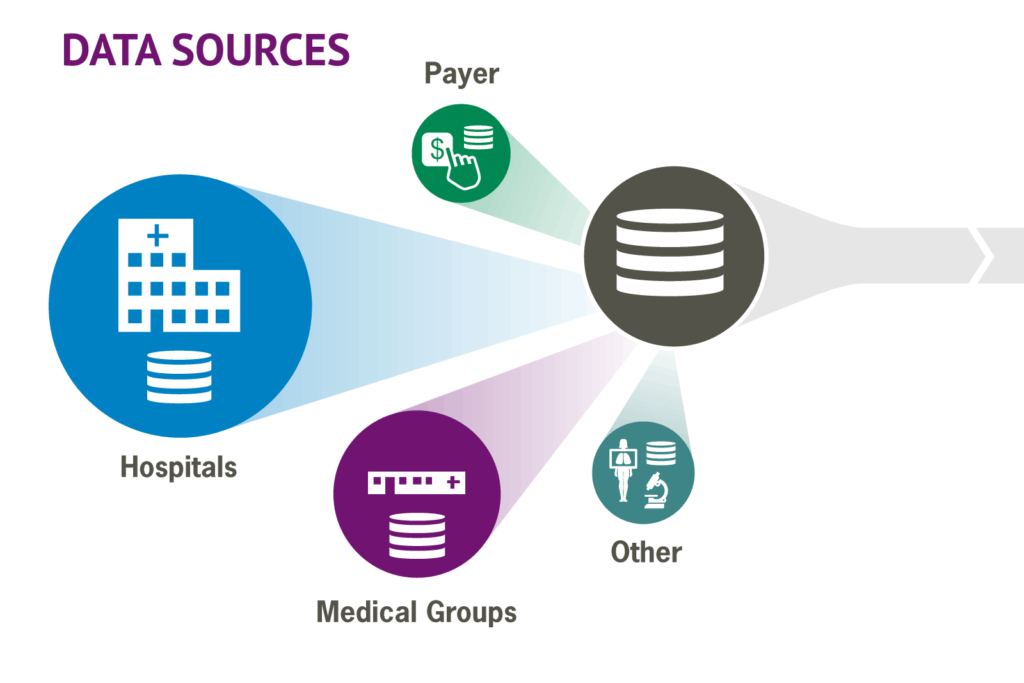
Understanding Data Sources
List all the sources of data. Organized and non-organized data are used to get a much clearer picture. I believed there was no need to worry about any dirty data. Wrong. Data can also have tremendous value if it’s scrambled. Beware of isolated information that is a killer of insights.
Building Predictive Models
Create models specifically to your business. The accuracy of their predictions relies solely on the data that is fed into them and that it is relevant and accurate. Suppose a retail model that predicts how many people will buy during a holiday is fed with good patterns of buying from the past and is 95% accurate. A retail model that predicts the number of people who will buy during a holiday could be 95% accurate if fed good patterns of buying in the past. This won’t improve if there is not enough historical sales information to adequately train the model.
Implementing Insights :- Turn those insights into tangible actions. Predictive analytics provides no value if its findings just sit around. Actually, no. The entire point is to make better choices, faster.
Turn those insights into tangible actions. Predictive analytics provides no value if its findings just sit around. Actually, no. The entire point is to make better choices, faster.
Without a strategic approach, even the most advanced analytics tools fail to provide any real advantage in the market.
Stay Ahead: Continuous Learning in Tech
Technology doesn’t wait. Nor should you! The need to stay abreast requires continuous learning. However, the thing is that not all the time it is about officially received degrees. Look. The tech world moves rapidly, new languages or platforms come into existence every couple of years. One large conference should be sufficient to keep you informed. It doesn’t. There is a need for sustained involvement.
Self-Paced Learning Platforms
There’s a lot of flexibility in programs such as Udemy and Coursera. They are ideal to learn at your own pace, around your hectic schedule. Many of them have hundreds of courses in each domain; for example, in AI, for less than $50 per month.
Certification Programs
When you have an official certificate from a well-known organization, you will always be up-to-date and retain your reputation. They are proof of your knowledge and skill in certain topics, and help you to feel like you understand the material. This won’t be beneficial if this certification is not acknowledged in your industry.
Networking and Conferences
Engage directly with peers and prominent figures in the industry. Conferences are often gold mines for novel ideas and making key connections. Watch out for events that are purely sales pitches; seek out genuine knowledge-sharing.
Embracing continuous learning ensures you remain highly relevant in a constantly changing tech world.
Frequently Asked Questions
Ans.- Costs vary widely based on scale and tools. Expect initial costs, but ROI is high.
Ans.- Identify needs first, then evaluate tech on compatibility and cost.
Ans.- Avoid when current systems meet all needs effectively and new tech offers no clear advantage.
Ans.- Neglecting thorough needs assessment and underestimating training needs are frequent pitfalls.
Ans.- Regular training, engaging in online platforms, and attending conferences are key strategies.
Conclusion
In short, it’s essential to keep up with technology Cheap VPS Hosting I’ve seen it firsthand that it’s the companies that do their planning well that do well, and to a lesser extent, the companies that purchase the newest product. With OnliveServer, businesses can count on solutions and insights specifically designed to meet the demands of the modern environment, helping them navigate the complexities of today’s often-tricky landscape. It’s not just about catching up; it’s about being the leader in the highly competitive tech world.