Introduction
Digital marketing is not a fad; it’s simply the life of the businesses today. I’ve witnessed the transformation of companies to world-class status by creating a well-designed digital strategy in my own experience, which completely changed their market footprint in more than 15 years. It’s no longer an option to have a strong online presence. It’s not simply about having a cool website; it’s about telling tales, reaching out to clients on their level, and adapting your strategy continually because of data. OnliveServer has been successful in making these intricate opportunities tangible by converting them into measurable success for organizations of all sizes. Believe me, the knowledge of algorithms, consumer psychology and how technology plays a role in it is crucial. The true strength lies in strategies that engage people on a personal level and respond to an ever-changing world.
Understanding Digital Marketing Frameworks
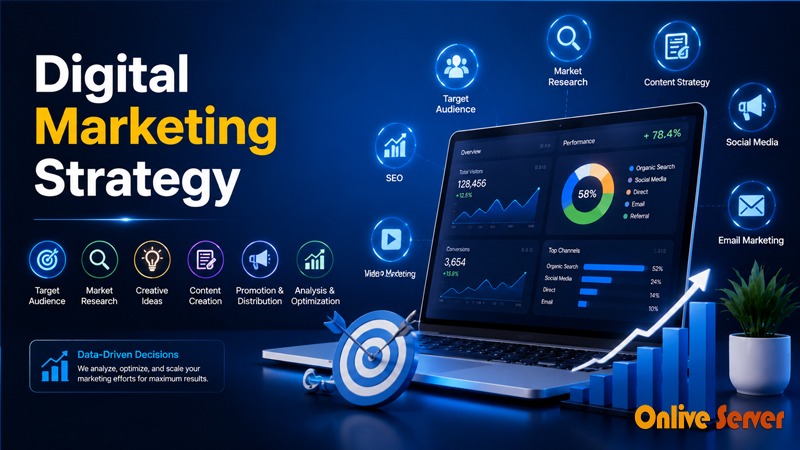
If you want to get the true meaning of digital marketing, then you should understand the framework of digital marketing. No, it’s not- you’d think that it’s just about throwing chunks of money at ads. It doesn’t. Digital marketing is a prudent and organized approach to reaching individuals through the Internet. There are many brands pursuing the newest new thing without setting up any core principles. That’s a mistake. Use the bricks as a starting point: SEO, content, social media, and email. Well, the problem is how can they all work together? This is crucial in interconnections. Be aware of agencies that offer quick solutions – real growth takes time and consistency and is likely to see real results after 6-12 months. This will do nothing to improve your product if it is actually a terrible product.
SEO: Foundation of Visibility
With Search Engine Optimization, you ensure that your message doesn’t get eaten by the internet. This is the way that Google and others discover you. If you neglect to do it, it’s never going to be seen.
Content Marketing: The Heartbeat
But content isn’t the only thing that’s king; it’s the air your brand breathes! If you have compelling stories and real valuable information, you will capture your audience’s interest and gain their trust.
Social Media: The Amplifier
Platforms like Instagram or LinkedIn aren’t just for personal updates. They become potent channels for connecting with your brand’s community.
By weaving these pieces together, your strategy transforms into a responsive system. A system that adapts to how consumers behave. Look, ignoring these basics is like trying to build a house without a foundation.
Crucial Differences: B2B vs B2C Strategies
B2B (Business-to-Business) and B2C (Business-to-Consumer) strategies are different and demand different sorts of approaches. These aren’t interchangeable. They each appeal to different consumer segments and have vastly different expectations. Here’s what no one tells you: If you use the same strategy to both waste a lot of time and money. It’s hard to imagine that a good ad would appeal to everyone. It doesn’t. Be aware of the non-discriminatory marketing firms. In the absence of a sales team that can follow up on particular leads, this won’t assist. The research shows that the length of the sales cycle for B2B is much longer than B2C, averaging 4-12 months.
B2B Strategies: Building Trust
Business-to-Business markets thrive on relationships. Credibility and trust are absolutely essential. Focus on platforms like LinkedIn, offering detailed white papers over fleeting memes.
B2C Strategies: Emotional Engagement
Business-to-Consumer marketing aims to capture hearts. Visually striking content and a strong emotional connection are your most powerful tools here.
Look, B2B buyers are knowledgeable, looking for a long-term solution and value. B2C shoppers however, want instant gratification and emotional appeal. It’s not a minor mistake when you don’t take this distinction into account. It’s a tremendous missed opportunity in connecting.
Advantages of a Comprehensive Digital Strategy
If you don’t have a digital marketing strategy, then you don’t have any marketing strategy. This is the spine of any business that is really operational in the current times. So, why bother? You would think that with a site you have to do no more than that. It isn’t. The results are astounding, apparently! Be aware of tactics that only give vanity metrics and focus on conversion rates – which can be 2-3x higher with targeted digital marketing. This will not help if your product/service is not in solution to a customer problem.
Expanding Reach: Global and Local
Digital approaches smash geographical limits. Your message can reach a worldwide audience or connect deeply with local communities. It travels far.
Cost Efficiency: Higher ROI
Compared to old-school advertising, digital marketing typically costs less. Plus, it offers far more accurate targeting, delivering better returns on your spend.
Real-Time Engagement: Instant Interaction
With digital channels, businesses connect with customers immediately. This builds stronger, more personal relationships quickly.
But here’s the thing: a smart plan does more than just make you visible. It solidifies your brand’s standing and fuels lasting growth. What’s holding you back from seizing these incredible advantages?
Understanding Online Marketing Approaches
To most people, digital marketing is synonymous with posting on Instagram. Actually, no. It’s much more sophisticated, it goes beyond social media pushes to finding you on Google. It would seem a few posts here and there would suffice. It doesn’t. The whole thing is about reaching out to people on-line, gaining their trust and then converting their connections to real transactions. Beware of agencies that claim overnight success, as a good digital strategy can only begin to make a real impact in terms of ROI in 6-12 months. This will not do any good if your fundamental product is shoddy.
Social Media Marketing
Social platforms aren’t just for sharing pictures of your lunch anymore. They offer a potent way to genuinely connect with your audience and build a loyal following.
Search Engine Optimization (SEO)
Look. SEO is the absolute bedrock of being found online. It makes sure the people who need your solution actually discover your content amidst the noise.
Smart businesses use these tools to truly dominate their niche. They show up exactly where their customers spend time, interacting in ways that build real loyalty. That’s how you win.
Effective Strategies for Internet Advertising
Don’t just post some social media content or email some now and then. Any good online ad strategy requires a lot of thought. Needs an exact, data-dependent strategy, and is always watching people and anticipating new technologies. I thought that basic outreach will be enough. Wrong. This won’t be of any use if you’re not keeping track of what your competitors are doing, otherwise they’re spending millions a year in this area.
Content Marketing
Here’s what nobody tells you: outstanding content still rules. It pulls people in and establishes your genuine credibility with precision.
Email Campaigns
Yes, even in this age, direct emails remain an incredibly potent tool for personal connection.
But here’s the thing: you can’t just set these strategies and forget them. What brought success last year could totally fail today. Always stay current. Try new tactics. Be ready to change direction quickly to keep things working.
Key Metrics for Evaluating Marketing Success
Look. When you can’t measure it, what is the point of doing it? Numbers aren’t the only indicators you need to know if something is working or not. I have tried this myself: If there’s no data, then there’s no certainty. With a marketing budget of $10,000, you could go weeks without knowing what you are spending and wasting money. This will not be of any benefit if your staff has no training in tools for analytics. Beware of vanity metrics that may appear to be good but aren’t actually meaningful to the bottom line.
It’s no use just collecting data. It’s a must that you analyses it. Go deep with those numbers, to hone in on approach. It turns out, search algorithms are constantly changing, as is what people are looking for and marketers need to play catch-up. For companies, incredible insight into these trends is afforded by a good tool, such as Google Analytics, which enables them to make quick course corrections. That’s the way to be competitive.
Frequently Asked Questions
Ans.- A digital marketing strategy is a plan that outlines how a business will achieve its marketing goals using online channels.
Ans.- Digital marketing offers targeted campaigns, reducing wastage and allowing for budget adjustments based on performance.
Ans.- If your target audience is primarily offline, traditional marketing might be more effective. Digital isn’t always the best fit.
Ans.- Neglecting mobile optimization is a frequent pitfall. Ensure your content is mobile-friendly to reach a broader audience.
Ans.- SEO enhances online visibility by improving site rankings on search engines, a crucial component of any digital strategy.
Conclusion
In conclusion, the online marketing landscape is constantly evolving, and it’s essential for marketers to stay informed and adapt to changes quickly. If you just observe trends, you won’t be able to be competitive, you need to understand them and use them. To me, a robust online presence is a good indicator of a serious business these days. These are just some of the strategies that companies should employ to be successful. WordPress Web Hosting With OnliveServer, you’ll always be ahead of the curve, gaining insight to take your digital plans to actual business expansion. Don’t simply play the digital game, believe it.